Monday, September 14, 2020

Certificate iv in Training and Assessment

Certificate IV in Training and Assessment

This certification is required by Australian institutes in case you want to provide training/teaching to the students.

I am doing it through TAFE and writing here for the ease of other people. 
TAFE provided full support to achieve this as I was to start as casual part time teacher at TAFE NSW. The pay rate they are committing is pretty good. The course can be finished in year but I am heading to finish it asap.

There are other institutes too who offer this course but I got this as scholarship at no price.

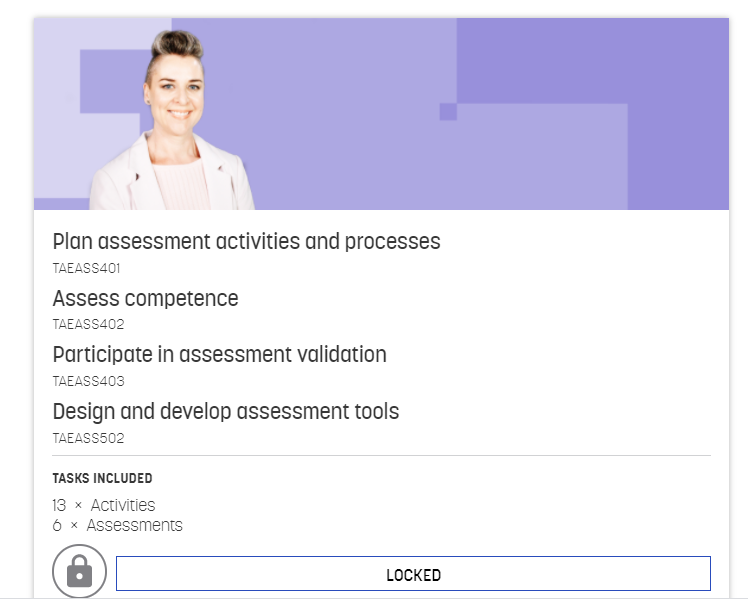
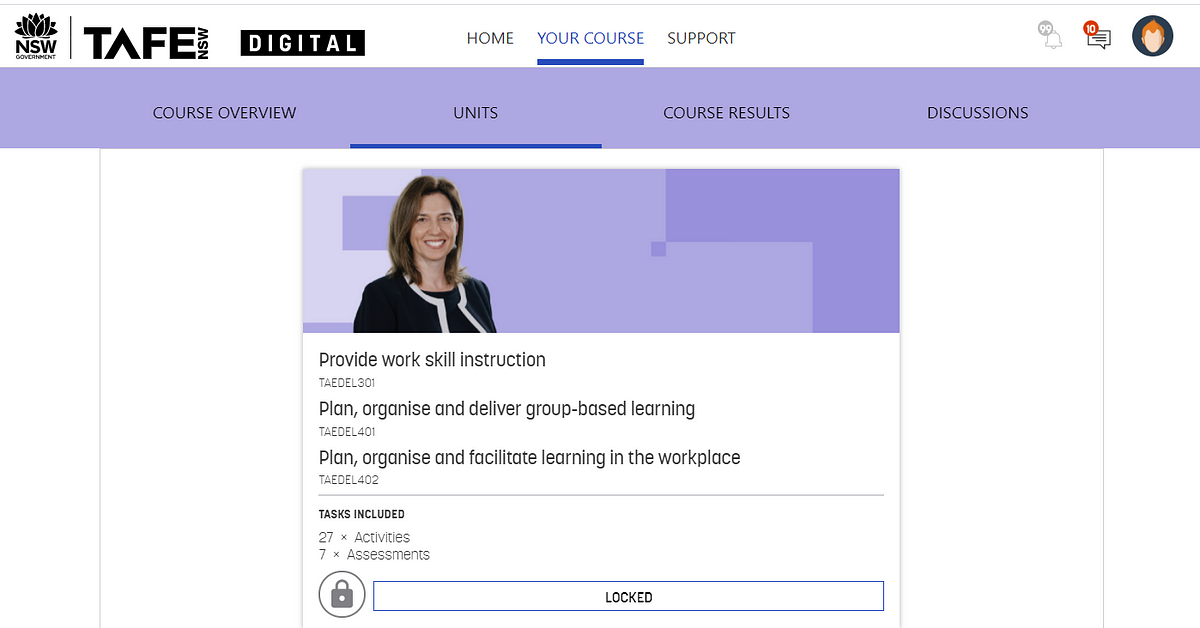
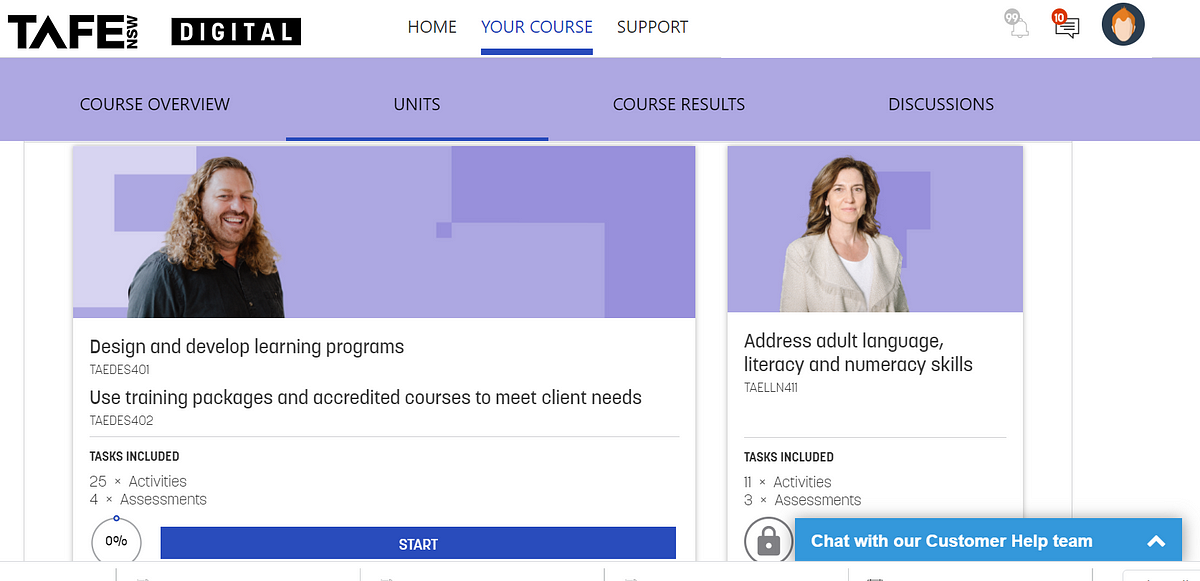
There are four units in total and in total 20 assignments.

Unit 1 and 2
Unit 3
unit 4

Details about Unit 1:

TAFEDES401 — Design and Develop learning programs

  1. Introduction to Design
  2. Consultation
  3. Purpose of training and assessment
  4. Characteristics of learner groups
  5. Training Packages
  6. Analysis units of competency
  7. Training package developers
  8. Australian Qualificaions Framework
  9. VET Standards
  10. Accrediated Courses
  11. Organisational Standards
  12. Assessment Check-in
  13. Contextualising
  14. Dimensions of Competency
  15. LLN Requirements
  16. Instructional Design Principles and methodologies
  17. Delivery methods
  18. Research existing resources
  19. Developing new activities
  20. Assessment Strategies
  21. Learning Programs
  22. Work, Health and Safety
Governing Bodies:

SSO -Skills Services Organisations

SSO are funded by Australian government to support IRCs. SSOs act as independent, professional service organisations and undertake the training package related work commissioned by the AISC, under direction of the relevant IRC. SSO support IRCs in their engagement with industry/employers/ enterprises and other stakeholders to identify the skills required for jobs, and drive the training package development and review process so that skills standards and competencies align with modern work-practices. SSOs develop compliant training packages that are relevant to a modern Australian economy, are embraced by industry and maximise the potential for individuals to access employment.

ASQA — Australian Skills Quality Authority

ASQA is responsible for protecting the quality and reputation of the Australian vocational education and training (VET) sector. The body has the responsibility for the registration of training providers and accreditation of courses to ensure nationally approved standards are met. They regulate around 90% of the AUs VET providers which are called RTOs. In addition to this, the body also regulates ELICOS and CRICOS which are designed for international students. However, ASQA doesn’t set regulatory standards and frameworks.

Additional reference I have collected : https://youtu.be/BPCnRVk4wik

AISC — Australian Industry and Skills Committee

As mentioned, ASQA doesn’t set the regulatory standards and frameworks. So Australian Parliament approves the legislation to be used by regulators. Hence, AISC has the authority to approve all VET standards through training packages development. Membership of AISC is comprised of members from industry from all States, Territories, and New Zealand. The AISC recommends national training package products to the Skills Council (COAG CISC) for endorsement.


Monday, January 7, 2019

Dubai Trip

Country name: United Arab Emirates 🇦🇪
Currency: Dirham (1 dirham = rs 20)
Visa cost: 8000 per person
Visa time: max 2 weeks

Return Airfare: Rs18000 -20000 (around 350-400 AUD) per person (direct flight from Chandigarh)

Average Hotel expense: around 200-300 dr ( rs 4000-6000) per night twin sharing basis

Places to visit and activities:
1. Dubai mall (worlds largest mall contains outlet of each brand. For ex Louis Vuitton has 4 stores in it)
2. Miracle garden
3. Dubai frame
4. Kings palace
5. Marina dhow and cruises
6. Desert safari (Jeep safari, camel riding, quad biking )
7. Bollywood Park motiongate
8. Atlantis water and theme park
9. Burj Khalifa ( world”s tallest building) and Dubai mall fountains
10. Burj al Arab hotel - worlds tallest hotel costs $15000 per night
11. Dubai Creek
12. Gold suik ( gold market)
13. Legoland water park

Best time to visit - November to April. December and Jan are the peak months for tourists.

I recently visited Dubai and it was an awesome place. In case someone is looking for a nice family trip with a narrow budget, let me know. I have good contacts over there who can arrange stuff in cheaper rates.

I stayed in a good budget hotel at Bur Dubai. Hotel name was Omega hotel and it had all the amenities required.  Also, very near to 24-hour open market.

One day we spent at Yas Viceroy hoel in Abu Dhabi at Yas Island and it was an amazing experience. Hotel is quite expensive but it is worth staying at least a day. The hotel has private F1 racing track and Marina. The view is great. However, it is 35 km away from the Abu Dhabi city.
It was the most luxurious hotel I stayed ever. If you want to get the best room on family member's birthday or anniversary, let the hotel reception know about it once you get in. They will make your event best or maybe they can upgrade the room to the Suit which is an amazing experience.
The hotel itself has 6 restaurants inside it. One of the Indian restaurants is called Angan.

The whole booking was done by Jaya Maini (my friend and host in Dubai). She is the most knowledgeable and welcoming person with lots of ideas to propose to make your tour best.

The highlights of the tour was :

1. Hummer ride on day 1 to King Palace
2. Adventurous ride on world's fastest Roller coaster at Ferrari world, Abu Dhabi.
3. Luxurious stay at YAS hotel with an option to drive F1 racing car.
4. Fountain show at Dubai mall in the evening.
5. Dinner at Desert safari camp. 


YAS hotel Abudhabi - Private F1 Track and Marina view

Hummer ride


Dubai Mall

Top view from Burj Khalifa

Warner brothers - Abu dhabi

Desert safari


Camel safari


Camp meals and refreshments at Desert safari

Ferrari world - Most thrilling theme park

World's fastest roller coster


The grand mosque marvelous architecture - Abu dhabi 

Warner brothers

Warner brother's

Miracle Garden


Email me for more details : vikas.kumar1982@yahoo.com


Tuesday, October 16, 2018

Australian Accent

Glottal Stop:
Speakers of British English always seem to be on the lookout for the glottal stop: that abrupt silence that can replace the “t” in words like “right” or “taught” or between the syllables in an exclamation like “uh-oh!”.


For ex:


Water : Wata

Sunday, April 29, 2018

10 Famous People

1. Samin Nosrat:
A cooking professional writer, teacher and chef.


Samin Nosrat (Born 1979 [1]) an Iranian-American chef and food writer.[2] She is a regular food columnist for The New York Times Magazine[3] and has a television show in production.[2]
Nosrat's 2017 cookbook Salt, Fat, Acid, Heat was named "Food Book of the Year" by The Times of London,[4] and was a New York Times best seller.[5]
Nosrat's food career began while she was a student at UC-Berkeley, where she worked with Alice Waters in the kitchen at Chez Panisse.[2][3] After leaving Chez Panisse, she worked in Italy and other Berkeley-area restaurants.[6] She later worked with Michael Pollan, and was included in his book and Netflix special Cooked as "the chef who taught Michael Pollan how 

Her books: 
1. Salt, Fat, Acid and Heat
2. Mastering the elements of Good cooking

Monday, August 15, 2016

Sources of Learning and Earning through Online Education system

Hi Reader,

I am writing up all my knowledge collected through various magazines and blogs about Online Education.

If you have good teaching/coaching/mentoring skills, you can utilise those skills by imparting online coaching to the needy students. But the question is how to find those students who need your mentorship and ready to pay you for your efforts.

Here are some sites which helps you to connect to thsoe students:

1. Udemy.Com
You can record your video session on a topic and upload it here. Declare a price onto the lecture and publish it.

2. Courseera.com
There are hundreds of free courses available and you can also participate in teaching by uploading your videos.

3. UrbanPro.com
This is an Indian site which connects a teacher and a student. You can register yourself as a teacher and you can find the students who might be willing to travel or might take online training on Skype.

4. Lynda.com
You can design your course here and upload it like udemy or courseera

Sunday, May 31, 2015

My favourite Books

1. 4 Disciplines of Execution
2. The monk who sold his Ferrari
3. The Focus - Daniel
4. Tools of Titans - Tim Ferris
5. The subtle art of not giving a fuck - Mark Manson
6.

Sunday, February 1, 2015

Bulletin Board

Lava unveils IRIS Fuel 60 smartphone
Lava Iris Fuel60 - Best Android Mobile

Get 3X POWER!


  • 4000mAhBattery Li-Polymer
  • 12.7 cm(5.0) HD IPS Display
  • v4.4Android (Kitkat)
  • 1GB


Michael Dell

Born on February 23, 1965, in Houston, Texas, Michael Dell showed an early interest in technology and gadgets. At the age of 15, he purchased an early Apple computer in order to take it apart to see how it worked. In college, he started building computers and selling them directly to people, focusing on strong customer support and cheaper prices. Dell Computer was the world's largest PC maker.

Dell's success wasn't entirely surprising. While his mother, a stockbroker, and his father, an orthodontist, pushed their son to consider medicine, Dell showed an early interest in technology and business.
A hard worker, Dell landed a job washing dishes at a Chinese restaurant at the age 12 so that he could put away money for his stamp collection. A few years later he harnassed his ability to sift through data to find new customers for newspaper subscriptions for the Houston Post, which earned the high school student $18,000 in one single year.
Intrigued by the expanding world of computers and gadgetry, Dell purchased an early Apple computer at the age of 15 for the strict purpose of taking it apart to see how it worked.
It was in college that Dell found the niche that would become his boom. The PC world was still young and Dell realized that no company had tried selling directly to customers. Bypassing the middleman and the markups, Dell tapped his savings account for $1,000 and started building and selling computers for people he knew at college. His emphasis, however, wasn't just on good machines, but strong customer support and cheaper prices. Soon, he had accounts outside of school and it wasn't long before Dell dropped out and focused all his efforts on his business.
The numbers proved staggering. In 1984, Dell's first full year in business, he had $6 million in sales. By 2000, Dell was a billionaire and his company had offices in 34 countries and employee count of more than 35,000. The following year, Dell Computer surpassed Compaq Computer as the world's largest PC maker.
Overall, Dell's first 20 years proved to be one of the most successful businesses on the planet, surprising such titans as Wal-Mart and General Electric. Dell's story is so compelling that, in 1999, he published a best-selling book about his success, Direct from Dell: Strategies That Revolutionized the Industry.
Dell married Susan Lynn Lieberman on October 28, 1989 in Austin, Texas; the couple reside there with their four children.
In 1999, Michael and Susan Dell established the Michael and Susan Dell Foundation, which focuses on, among other causes, grants, urban education, childhood health and family economic stability

Monday, January 26, 2015

Ginger

Ginger is classified as a herb which have been widely used as traditional medicine or spice in many cultures throughout the world. Ginger is often referred to as a root, but it is actually an underground stem (called rhizome).

Ginger is known to have more than twelve types of anti-oxidants, making it useful for treatment of many disorders. Like other spices, it has aphrodisiac properties and is used widely for medicinal purposes.
This herb contains essential oils, protein, calcium, phosphorus, iron, vitamin C, choline, folate, inositol, manganese, panthotenic acid, silicon, and a small amount of vitamin B3.

History of Ginger:
that ginger has been used in China for over 2,000 years to help digestion and treat diarrhea, nausea and stomach upsets.
The Mahabharata (circa 4th century BC), one of the two major Sanskrit epics of ancient India, describes a stewed meat meal which includes ginger. Ginger has also been a key plant in Ayurvedic medicine, a system of traditional medicine native to the Indian subcontinent.
Approximately 2000 years ago, ginger was exported from India to the Roman empire, where it became valued for its therapeutic as well as culinary properties.
Ginger continued to be traded in Europe after the fall of the Roman empire, where its supply was controlled by Arab traders for hundreds of years. During medieval times it became a popular ingredient in sweets.
During the 13th and 14th centuries ginger and black pepper were commonly traded spices. By the sixteenth century one pound in weight of ginger in England would cost the equivalent of one sheep.
Anti-coagulant:  Add ginger in most of your cooking or add a teaspoonful of young ginger juice in your beverages to enjoy the anticoagulant properties of ginger. It helps make blood platelets less sticky which in turn reduces your risk of atherosclerosis.
Cold:  Cut up a small piece of old ginger and boil it with a small cup of pure drinking water. Add some green tea leaves if you wish. Strain and drink when hot. Effective if you also have fever resulting from the cold. You may also drink this concoction if you feel a cold coming.
Cough:  Drink ginger juice with raw honey three to four times a day for a bad throat. It is soothing and helps clear up phlegm.  If it’s a dry cough, use the young ginger.  If there is phlegm, use the old ginger.

Soothes the digestive system

Ginger improves the digestive system, stimulates, helps in the absorption of nutrients, absorbs gases and toxins and helps the skin to release toxins

Reduces nausea and vomiting

Recent studies show that ginger is very effective in preventing nausea, especially seasickness. Ginger has a great effect that has been proven to be very effective in preventing vomiting during pregnancy.  Compared with conventional drugs that may harm the foetus, ginger is completely safe to use without side effects and you need a relatively small amount of it.
Mix a teaspoonful of young ginger juice with one teaspoonful each of fresh lime juice and fresh mint juice with some honey to taste in a glass of water. Drink to relieve heartburn, indigestion, nausea and vomiting. Especially helpful after a big meaty meal.

Anti-inflammatory

If you suffer from arthritis pain in the knees, consuming ginger on a daily basis can definitely help. Ginger contains powerful anti-inflammatory substances called gingerols. These have been tested in various research of rheumatic diseases such as osteoarthritis or rheumatoid arthritis. The participants in the research reported a gradual reduction of pain, improving agility and movement and reduction in swelling when using ginger regularly.
Float some ginger essential oil in your bath to help aching muscles and joints.
Slice a piece of ginger into disks and boil it with a big glass of water. Add a piece of cinnamon bark, bring to boil and then cover it for about half an hour till it turns to golden color. Drink it to relieve fatigue when recovering from fever. It also relieves muscle pain and soreness.

Protects against colon cancer

These gingerols, the main active ingredient in ginger, that are also responsible for the special taste, may prevent the growth of colon cancer cells, according to a 2003 study. This study showed that ginger is effective in preventing and treating colon cancer.

Kills ovarian cancer cells

Studies at the University of Michigan showed that gingerols also cause death to ovarian cancer cells. The ginger ingredients have been proven to have antioxidant, anti- inflammatory and anti- cancer properties. Ginger has the ability to reduced inflammatory in cell components attributed to the development of ovarian cancer, as well as components responsible for cell proliferation and distribution. Conventional chemotherapy treatments do the same action, but may cause the cancer cells to develop immunity against drugs.

Stimulates the immune system

Ginger not only warms us on a cold day, but it can also help in causing healthy sweating which is good to reduce fever in colds and flu. This sweating can stimulate the immune system and help the body cope better with the disease. German researchers recently found that the sweat triggers substances in the immune system that help fighting against various infections.
Menstruation disorder:  Pound a piece of young ginger and boil with a cup of water and add a little honey to taste. Drink it hot two or three times a day for a month. The pain-relieving and anti-cramping compounds in ginger effectively help relieve painful menstruation cramps (dysmenorrhoea). In the absence of menstruation in women in the reproductive age (amenorrhoea), this concoction can also help induce menstruation.
Haven’t been feeling hungry? Eat fresh ginger just before lunch to stoke a dull appetite and fire up the digestive juices
Can’t stop the toot-a-thon? Gas—oops—guess what?! Ginger helps reduce flatulence!
Tummy moaning and groaning under cramps? Munch on ginger.

Ginger juice for hair care:

If you want to have long and shiny hair, you should consume ginger juice regularly. It can also be applied on the scalp for good results. Just make sure that when you are applying it to your scalp, the consistency of water should be less. Ginger acts as a good conditioner to your hair; it also helps to reduce dandruff and speeds up hair growth. When ginger juice is applied to your hair, it creates irritation on your scalp which stimulates the flow of blood.

Acne:

Ginger juice when consumed helps reduce acne or pimples and it also prevents occurrence of acne in the future as it acts as an anti-inflammatory agent.
Tuesday, January 20, 2015

A pinch of English

PANIC BUTTON
It is meant as a warning (written or oral) for fast action, whether a situation might be dangerous , illegal or embarrassing.

WISDOM TEETH


HELL ON WHEELS

KNOW THE ROPES

TRUE BLUE
Represents honesty, reliability, faithfulness whether from a person or pet.


Wednesday, August 20, 2014

Amarnath Ananthanarayanan, 40, CEO & Managing Director, Bharti Axa General insurance

Amarnath A.

Bharti Axa General Insurance currently has a 3.6% market share among private companies and 1.7% overall.
Under Amarnath's stewardship, the company has grown from Rs 32 crore (gross written premium) in 2009 to Rs 550 crore in 2011.
Flexibility quotient is crucial
When I went to do my PhD in economics from Rutgers University in 1993 and took up teaching as an adjunct faculty of economics, entering the corporate world was far-fetched; more so, the idea of becoming a CEO. The only things I thought about then were research, teaching and publishing papers. That was between 1993 and 1998.
In 1998, the noise about Indian growth was getting louder. Everybody talked about how the country was the future hub of growth for almost every kind of business. And then came an opportunity to join GE Capital in India.
Professional and personal reasons drove me back to the country and I joined GE at 27 years. That was the beginning of a couple of years of learning. I worked across GE's financing business, including M&A, retail insurance, consumer finance, as well as collections operations at Genpact (erstwhile Gecis), spanning 10 countries. I worked towards setting up GE Money India's insurance distribution operations in 2002, which gave me the platform to create a strategic vision for the organisation as well as execute it.
For all that I did, I got the GE Capital India president's award for Outstanding Leadership & Demonstrating GE Values. That gave a huge boost to my confidence and I thought there was something good in store for me in the corporate world.
I took up another challenge and at 38, joined as the CEO and MD of Bharti Axa General Insurance in 2009. Through these years, some of the things I learnt as an academician and then as a corporate executive kept repeating themselves.
First, a good leader should be flexible and receptive to new ideas. Second, a CEO with strong physique and a domineering voice is respected and gets work done unlike in Thailand, where tall and dominating personalities are intimidating.
You have to change accordingly, and become a part of the environment that you are in, to be successful.

Deep Kalra, 41, Founder & CEO, MakeMyTrip.com


Deep Kalra

Started his online venture in 2001
In August 2010, MakeMyTrip had a dream debut on Nasdaq, with the parent company's shares soaring over 80% after listing, catapulting its valuation to $800 million on Day 1.
The company raised $58 million from its initial public offer. At an offer price of $14 per share, the company was valued at close to $450 million prior to listing, and is currently valued at close to $1 billion.
The company achieved sales of Rs 2,200 crore in the financial year ending March 2010 and continues to grow rapidly at over 50% in the current year.
A good team is a plus
I had always aspired to be an entrepreneur. During my assignment with GE, I realised the potential of the internet. This, and my passion for travel gave birth to MakeMyTrip. Finding investors for an online venture in India was difficult, so we started services for NRIs in the US.
Success is a combination of factors. For me, having a great team to support the venture and work with is on top of the list. Another big factor is perseverance.When I started the company in 2001, market conditions were poor. I could have called it quits and moved on, but I decided to hold on to the venture. We worked on execution and innovation, which helped the business grow immensely. This was a decade ago. My stints with GE Capital, AMF Bowling and ABN Amro Bank, too helped. At GE, I learnt how to handle scale, AMF was an entrepreneurial experience while ABN Amro was a young company when I joined.
Creating a good work environment is a bigger validation than any financial achievement.
I truly believe that without happy employees, you can't have happy customers.

Nadia Chauhan

Nadia Chauhan, 25, Joint MD & Chief Marketing Officer, Parle Agro

As the scion of the promoter family, Nadia was learning the basics of business in her school days.
When she finally joined in 2003 as a marketing executive, her main task was to expand Parle Agro's product portfolio
Eight years down the line, Nadia is at the helm of the company, which has entered newer categories like food and juices, grown the turnover from Rs 400 crore to Rs 1,500 crore with a 40% growth rate, and increased its market share in the fruit-based beverage category to 85%.
Nadia Chauhan

When in doubt, always ask
I firmly believe the starting point of a successful leader is good induction into the business. My visits to the office and plants during weekends since the age of 11 helped me grasp little bits about brand building, business culture and operations. With a good induction, leaders can draw their future strategies based on both past performance as well as the current scenario.
Another way to success is to work at the ground level and be passionate about the job. For instance, during my early days, I was part of the launch of our jelly drink, Jolly Jelly. Since this was the first time any Indian brand had launched a jelly product, there was a misconception that the product was non-vegetarian. In those days, there was also no concept of vegetarian and non-vegetarian logos. We went to Mumbai's Juhu beach and marketed the product as 100% vegetarian. That worked miracles and the sales increased.
Since I attained a leadership role while in my 20s, there were apprehensions about how to work with people who are much older. I realised that one needs to give equal importance to everyone and view things with an open mind.
Also, never fear to ask a question even if it is basic. I have made it a point to ask 'why' six times whenever someone comes with a new business proposal or for an approval. This only helps the person improve his/her idea and concept about the subject.

Latest Gadgets I have read about


1. TYLT Energi+ Backpack:The ENERGI+ BACKPACK is a next-gen briefcase, backpack and mobile charging station. TYLT designed the charging system so you can route the cables to any one of the 5 External Pockets or 2 internal Pockets.

Yes, for all you tunes lovers, there is a neatly located headphone pass-thru. The removable 10,400mAh rechargeable Lithium Ion battery provides up to 4 full Smartphone charges or 1 full tablet charge. With over 1,450 cubic inches of internal space and 13 total pockets it's designed to stand up when put on the ground and it's built with the finest materials available. For the true traveler there is a trolley slot hidden in the backpack panel, a headphone carrying compartment on the backpack strap and a full length zipper pocket right on the front of the bag for airline tickets and passports. The bag was thoughtfully designed to be fly-through friendly at airports - you can pass through security without removing your laptop. For the tablet user there is a dedicated soft lined tablet pocket with a 3/4" zipper that allows you to easily and safely get your tablet out without opening your entire backpack. The laptop compartment is soft lined and will accommodate laptops up to 15.5in x 10.5in x 1.5in.

Backpack Specs
• 1680D Poly Material
• Fly-through Friendly
• Brushed Metal Zippers

Battery Specs
Input Voltage: 5V 1Amp (Micro USB)
Output Charging Current: 4.75V - 5.25V - 1Amp
Lithium Ion Battery - 10,400 mAh
Battery Charge Time 7-8 Hours
Two 1Amp USB ports for charging phones
One 2.1Amp USB port for charging tablets

- See more at: http://shop.tylt.com/pc_product_detail.asp?key=F48A3F22AB854B8A9CBE9DDB81B55116#sthash.BcOOiVeT.dpuf

http://www.tylt.com/energi-backpack/

2. Solar backpack:

http://indiasolarhomes.com/the-indian-made-solar-backpack-to-charge-your-gadgets-on-the-move/

Sunday, August 3, 2014

CITRUS FLUSH – For Liver Cleansing

Loss of appetite, nausea and extreme tiredness – these are the symptoms of an unhealthy lever. Although most liver diseases are associated with alcoholism and substance abuse, several other factors may also contribute to its deterioration. It is important to note that unhealthy liver symptoms may take several years to surface, making it even more important to give your liver that extra attention.

Types of Liver Disorders:

1. Hepatitis: Common forms are A, B and C. It causes inflammation of liver.

2. Cirrhosis: Blocks the flow of blood through liver, disrupting metabolic processes and causing permanent damage to the liver.

3. Steatosis (Fatty Liver): This causes accumulation of fat in the liver due to excessive alcohol consumption or obesity

4. Gilbert’s Syndrome: It is  fairly common liver disorder especially among men during their teens or early adulthood.

Liver Failure:  When a large part of the liver gets damaged beyond repair and is unable to perform its function, it is referred to as liver failure. It is very often life threatening.

Studies show that  one out of 10 teenagers suffer from liver disorders. This could be due to:

1. Reduced or no exercise.

2. Excessive consumption of processed food.

3. Excessive consumption of Alcohol.

How to control Liver Disorders:

The best way is to  invest in a balanced diet. This can be achieved by:

1. Eat 4-6 small meals throughout the day so that there are enough calories to sustain body functions.

2. Stay away from foods and liquids that contain high amount of sodium.

3. Restricting alcohol consumption to within prescribed limits.

Cleansing Liver:

Here is the recipe called Citrus Flush which helps cleansing Lever

Ingredients:

  • 1/4 cup freshly squeezed lemon juice
  • 3/4 cup freshly squeezed orange juice
  • 1 tablespoon olive oil
  • 2-4 cloves of raw garlic

In  a blender combine all these and mix well until mixture is frothy. Drink it at least once a day in the morning empty stomach or twice daily (morning and evening). This drink can be refrigerated for 1 week.

Wednesday, July 23, 2014

Charles Chuck Feeny of Duty Free Shoppers - The ultimate Impressive Words about a Philanthropist

Hi Readers,

I have never heard about this 84 year old Guy before and I am quite sure a very few people have heard about him. Don't blame yourself if you haven't heard his name ever.
His name is Charles Chuck Feeny.


You must have heard about Duty Free Shoppers Group (DFS group) a major luxury travel retailer. This outlet can be seen easily on Airports. Charles Feeney is co-founder of Duty Free Shoppers.
Despite being the founder of a multi billionaire company DFS, he stayed determinedly under the radar.

But this is not the reason about Feeney's fame. His glory is because of his Philanthropic nature. He founded a company called Atlantic Philanthropies in 1982 in Bermuda and Feeney is known as James Bond of philanthropy.
He is the biggest Philanthropist people know nothing about. The reclusive former Billionaire not only decided to give away all his wealth in his own lifetime, but also leads a life of disarming simplicity.

As of October 2012, Atlantic has made grants totaling more than $6.2 billion since 1982 under supreme secrecy and plans to spend its remaining $1.3 billion by 2016. Atlantic would be wounded up in 2020. Feeney famously said "I would like my last cheque to bounce". When the Atlantic Philanthropies deos wind down in 2020, it would have given away Feeney's entire wealth to support a wide variety of causes including health, education, human rights across several countries. No one else have given away his entire fortune and that is too while they are still alive and breathing.

Feeney philosophies can be judged by reading through what he says:

"I had one idea that never changed in my mind—that you should use your wealth to help people. I try to live a normal life, the way I grew up, I set out to work hard, not to get rich."

"I see little reason to delay giving when so much good can be achieved through supporting worthwhile causes today."

“People used to ask me how I got my jollies, and I guess I’m happy when what I’m doing is helping people and unhappy when what I’m doing isn’t helping people.”

Feeny's idea is "Giving while Living" has inspired many others including Bill Gates and Warren Buffett.

 "Giving while dead, you don't feel anything"
 
What makes Feeney's story unusual is not just the fact that he decided to donate his entire wealth, which itself is extraordinary but how despite his billions made frugality the hallmark of his life. He never owned a house. He lives in his foundation owned Apartment in San Francisco. No luxury timepieces for his. He wears a casio rubber watch. He dresses shabbily and carries his papers in a shopping or plastic bag. If his glasses break, he takes them over to be fixed.

Feeney could afford to live like an emperor, yet he owns no property, flies economy class, dresses off-the-peg and wears a $15 plastic watch.

Feeney's friend Niall O'Dowd, who has know Feeney for more than 25 years, didn't know Feeney was rich until he was featured in Forbes magazine as one of the richest men in the world. Dowd wrote in his blog that Feeney acted poor. His insights were incredible.

He lavishes hundreds of millions of dollars on universities and hospitals but won’t allow even a small plaque identifying him as a donor. “We just didn’t want to be blowing our horn,” he explains in a rare interview at his daughter’s Upper East Side apartment.

He funded reconciliation in Northern Ireland and South Africa. He helped cure disease in Vietnam. He’s fought for better education and health care in the United States. He’s given more than $350 million to Cornell, his alma mater. And he’s been a mentor to countless philanthropists in recent years who want to learn how to be more effective charitable givers.

As of July 2013, 113 individual billionaires and couples have singed what is now known as "The Giving Pledge", a promise to give half their fortunes to charity. The first 40 donors alone pledged a combine $120 billion in donations. Over the next 20-30 years, that amount could grow by an additional $100-$200 billion!

Feeney, an Irish-American with dual citizenship, was born in New Jersey during the Great Depression and came from a modest background of blue collar Irish-American parents in Elizabeth, New Jersey, USA.
Feeney first showed a propensity for business at the age of 10, when he sold Christmas cards door-to-door.
He served as a U.S. Air Force radio operator during the Korean War, and began his career selling duty-free liquor to US Naval personnel at Mediterranean ports in the 1950s.
He graduated from the Cornell University School of Hotel Administration. In 2010 he received the Cornell Icon of Industry Award.

In 2012, in an historic event, all the universities of Ireland, North and South, jointly conferred an Honorary Doctorate of Laws on Feeney. During the year, he also received the Republic of Ireland’s Presidential Distinguished Service Award for Irish Abroad,and the UCSF Medal for outstanding personal contributions to the University of California, San Francisco’s health science mission.

Feeney has four daughters and one son. Two of the daughters are Diane V. Feeney and Leslie D. Feeney Baily. He married twice. His first wife, Danielle, from France, retained 100 million USD and a number of mansions and apartments after their 1990 separation and subsequent divorce.. His second wife is named Helga.

He made his own children work their ways through college and his name does not appear on any institutional building anywhere in the world. His intended goal is to give every last penny away before he dies.

Chuck Feeney's personal example has changed the world in ways that we probably can't even imagine yet. A true inspiration.


Timeline:
1982: Makes first grant of $7 million to Cornell. Total gifts will reach $937 million.
1984: Transfers his 38.75% DFS ownership to Atlantic.
1988: Gives $142,000 to support the Cancer Research Institute.? Worldwide cancer grants will hit $370 million.
1990: Atlantic makes its first grant to University of Limerick to construct advanced research, conference and cultural facilities. Lifetime grants: $170 million.
1991: Funds peace-building and reconciliation in Northern Ireland.
1997: Feeney goes public about his charity activities.
1999: Invests in Vietnam in the areas of higher education and health care.?
2001: Funds biomedical research at Australia’s Queensland U. of Technology; Total Aussie medical grants: $320 million.
2002: Makes grant for South Africa AIDS relief: has invested over $117 million in South African health care.
2004: Begins funding efforts to abolish the death penalty in the U .S. –has invested $28 million to date.
2006: Starts efforts to ensure health coverage for the almost 8 million uninsured children in the U .S.
2008: Makes $125 million grant for medical center at the University of California, San Francisco Mission Bay campus. Total UCSF grants: $290.5 million.
2012: With a $350 million investment, supports Cornell’s winning bid to develop NYC Tech Campus on Roosevelt Island.
2016: Will complete $1.3 billion worth of grants.
2020: The Atlantic Philanthropies will close.

Book:
http://www.amazon.in/Billionaire-Who-Wasnt-Secretly-Fortune/dp/1610393341/ref=sr_1_1_title_1_pap?ie=UTF8&qid=1406135073&sr=8-1&keywords=The+Billionaire+Who+Wasn%27t

 Please Add comments if you like it. Not about the post but about this Great Man - CHUCK FEENEY

Friday, July 18, 2014

Learn Earn and Save

While doing  Job, we are always told to save the money for future. We live in an uncertain world and we don't know when we need much money.
But saving in Traditional plans like LIC as suggested by our parents and near dear ones, doesn't mean a good saving to match the speed the speed of financial appetite to beat the inflation.
We must need to keep ourselves updated with the latest Saving Trends. However there may be some risk factors too involved but one has to choose his financial goals with the right set of tools with the same enthusiasm we put up while choosing a consumer durable for our home.

Which color, what size, its make, model, it warranty, electricity consumption and the best deal and the authentic dealer from whom to buy the product we always take care of these criteria while purchasing a consumer durable. Same way we must need to be cautious enough where we are
going to put up our money. Don't decide just by someone's advice. However the advice should also be taken into consideration but one has to think and take step by understanding and putting an extra eye on your investments regularily.

One of the best and good return investment tool has been proven through MUTUAL FUNDS. I started learning MF fundamentals in 2004 with a min. amount of 25000 which has given me more than 50%t return. All I needed to be extra cautious and keen to learn. Those 25000 became 65,000 in 2008. Seems unbelievable but it is the fact about Mutual funds. No any other investment can give this much return.

To heads up further with the trust in MFs, I started finding good agents who can suggest me the fund names to invest into. I also kept me updated with these names by listening CNBC TV18 and Zee Business channels. Those were quite helpful but again the dependency and time wastage was involved into it. If I need to invest minimal amount like 5,000, I need to call agent. He comes till evening and my money gets invested next day.

To overcome this, I found a new tool called www.fundsindia.com
One of the best company who works just like an agent and helps us to invest on a matter of mouse click.
Amazing speed and amazing processing time. The only hurdle you pass through is to get documents ready and let your Fundsindia account to connect with your bank. However there are another options also available these days to invest in MFs but this FundsIndia is proven to be greatest value. The another good factor about fundsindia account is it is absolutely free. You need not to pay any single penny.

Thank you FUNDSINDIA

Now I come to SIP (Systematic Investment Plan)
At earlier stage investment in MFs was one time payment. But since last few years, MF companies has given the provision to investors to invest their money through SIP which means one can decide monthly amount and can opt for number of months. After that period of time SIP gets closed. These days all agents are adhere to investment through SIP. However one time payment is also possible today too but SIP is proven to give better returns. I am going to explain how:

Each MF scheme is recognized by its index value called NAV (Net Asset Value). When someone invests money in that scheme he is allocated the units. The money invested divided by the current NAV for that scheme. Lets say you has invested Rs. 20,000 and at that time the scheme NAV is Rs. 200. So you are given total 100 units (200 per unit x 100 units = Rs. 20,000). Now you have to sit back and relax and to wait till the NAV jumps up. Once NAV is quite higher lets say jumps from 200 to 300 when sensex goes up, you can redeem it to earn profit. If the market is going down, you need to wait and watch when the market becomes back in Profitable position.

In SIP, you choose these 20,000 invested in 10 months (2000 per month).  So when you invest the money first month, you are allocated the units at current NAV. Hence Rs. 2,000 invested gives 10 units @ 200 NAV. Next month when 2000 are invested, you might get another 10 units or may be lesser or may be more than 10 because market is never consistent every month. Hence NAV goes up or down even each day with Sensex. So this way after 10 months with a positive result from Market, you gain more points than you can get through one time Investments. But here I want to mention there is no guarantee but historically it has been seen that SIP gives better units.  These days there are more flavors of SIP have been seen common. Flexi SIP is one of them.

Flexi SIP is a regular SIP but the amount invested per month is choosen by investor based on the fact if market is high then invest lesser and if market is going lower side then invest a bit higher amount. This way you gain more units at the end of your SIP.

I am running short of time so I would be adding more to this article soon. Keep waiting.

Wednesday, June 18, 2014

Sogeti consulting

Sogeti is a wholly owned subsidiary of Capgemini Group.[1] It is an information technology consulting company specializing in local professional services. Sogeti developed the Test Management Approach.
Sogeti was the original name for the entire Capgemini Group, founded by Serge Kampf in 1967. The name was an acronym for "Société de Gestion des Entreprises et de Traitement de l'Information" which, roughly translated from the French Language, means "Company for the Management and Processing of Information". Through the years names included Cap Gemini Sogeti, Cap Programator, Cap Gemini and Cap Gemini Ernst & Young.
In 2002, the Cap Gemini Group founded a subsidiary called Sogeti in six countries to focus on the local IT market. In 2008 the Sogeti Group employed 20,000 people[2] in 15 countries: Belgium, Denmark, France, Germany, the Netherlands, India, Ireland, Luxemburg, Norway, Spain, Switzerland, Sweden, Finland, UK and the U.S. It provides IT and management services with focus on application services, software control testing, infrastructure services and consulting.

Serge Kampf

Serge Kampf is a French businessman who founded the computer services company Capgemini in 1967. Serge Kampf serves as Managing Director of Cap Gemini EUROPE BV and Cap Gemini Benelux BV. 
  1. Born: October 13, 1934 (age 79), Grenoble, France

Muhammad Shujaat Siddiqi

Muhammad Shujaat Siddiqi has been serving the Enterprise Software Industry
for more than seven years in Pakistan and USA. He has a bachelor's degree in
Computer and Information Systems (BE) from NED University, Karachi. He is a
passionate blogger. For his services to WPF development community, Microsoft
awarded him MCC in 2011. He is a student of the Shaolin-Do form of martial arts.